
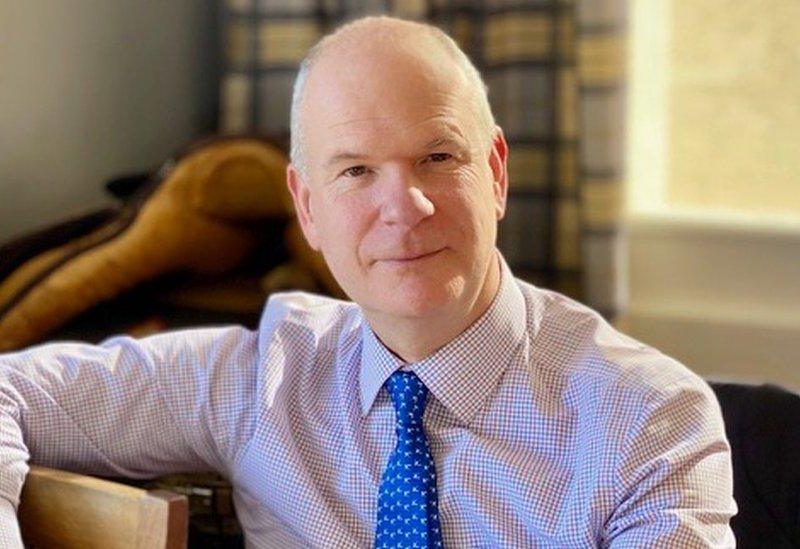
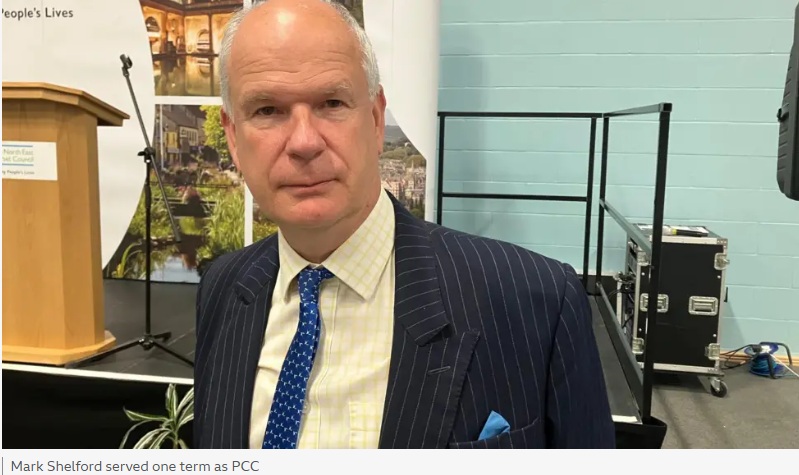
By Mark Shelford: Now that the dust has settled after the Home Secretary’s surprise announcement that Police and Crime Commissioners (PCCs) will be abolished in 2028, I can finally reflect on what this means for policing in England and Wales. PCCs—brought in by David Cameron’s government to strengthen local accountability, cut bureaucracy, and increase transparency—are now being described as an experiment that “failed to live up to expectations.” Low voter turnout is cited as proof. Yet the real question is: what system are we returning to, and is it any better? Because let’s be honest—the governance model before PCCs didn’t work either. Police authorities, much like Fire authorities today, suffered from weak scrutiny, limited visibility, and opaque decision-making. Nothing has changed in that regard. West Midlands Fire Authority remains a prime example.
And I say this not as an outsider but as someone who has sat on both Fire Authorities and recently served as a PCC. As a PCC, every decision was open, transparent, and published. Scrutiny sessions with the Chief Constable were televised. Only live operational matters or HR issues were exempt. Transparency wasn’t theoretical—it was real. Which is why the manner of this announcement matters. Colleagues in the Home Office, the APCC, and fellow PCCs tell me they had around 30 minutes’ notice before the announcement hit the press. No consultation. No modelling. No financial comparison. The decision does not feel like a long-considered strategic reform—more like a rapid political calculation. But let’s take the decision at face value and ask: If we are abolishing PCCs, what must be done to avoid creating a governance vacuum?
There are three areas that must be addressed together, not in isolation:
1. Governance: Avoiding an Accountability Void
The government intends to hand PCC responsibilities to regional mayors where they exist, or to elected council leaders supported by new “policing and crime boards.” In practice, this reverts the system back to a committee-style police authority model—one that history already proved weak.
The APCC has already warned of a potential “accountability vacuum.” And they’re right.
Deputy mayors and councillors will now inherit the “and Crime” responsibilities—arguably the most expensive and complex part of the PCC remit. This includes commissioning:
- domestic abuse support
- anti-knife crime initiatives
- youth crime prevention
- victim and witness support
- mental health and public protection programmes
These responsibilities involve multiple government departments: the Home Office, Ministry of Justice, and Department of Health. They require local insight, specialist commissioning knowledge, and a direct line of accountability.
Commissioning is not cheap, not simple, and absolutely not something that benefits from centralisation. Delivering value for money happens at local level—or not at all.
The Home Office says funding will be ring-fenced and victim support protected. But protected by who, and scrutinised by whom? These questions remain unanswered.
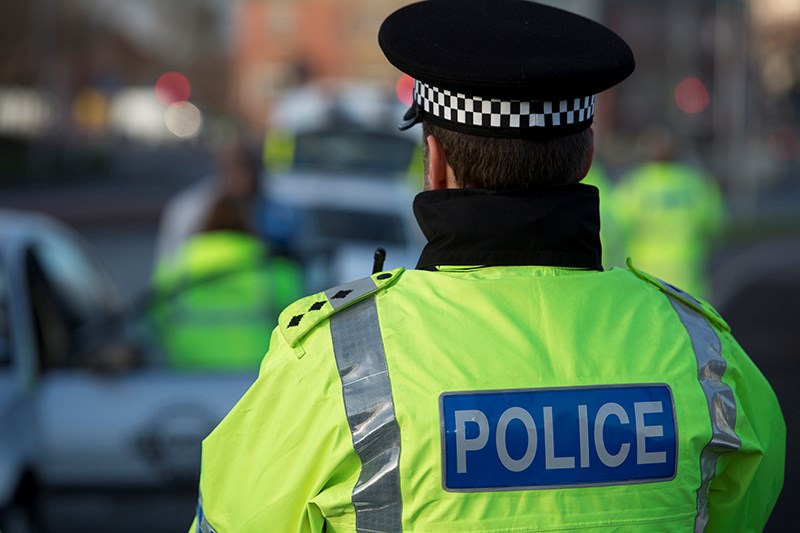
2. Police Structure: Are 43 Forces Still Fit for Purpose?
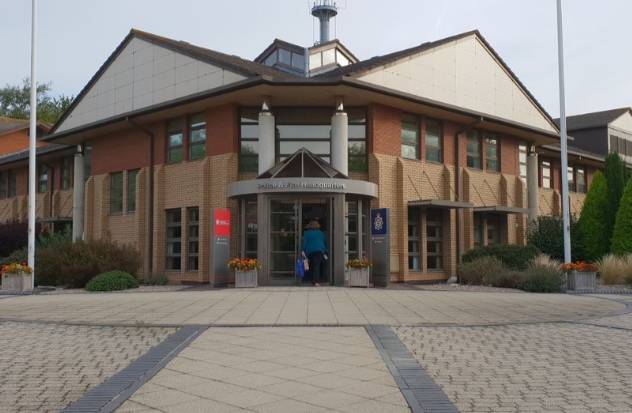
England and Wales have 43 forces, a structure rooted in historic boundaries rather than operational logic. The system offers genuine local responsiveness, but also exposes extremes:
- The enormous Metropolitan Police with 40,000+ officers
- Tiny forces like Wiltshire that struggle to cope with complex crime
This system has been debated for over a decade, but the abolition of PCCs brings it back to the forefront.
The government’s forthcoming Police Reform White Paper is expected to go further, potentially proposing:
- mergers into regional forces (some chiefs advocate reducing to 12–15 forces)
- more shared services
- centralised IT and forensics
- stronger national consistency
A new National Centre of Policing has already been announced, aimed at improving efficiency by pooling specialist capabilities.
But we need to be clear-eyed:
- Local delivery works best when the organisation isn’t too big or too small.
- Regionalisation could strengthen specialist capacity without losing local identity.
- Operational policing must remain politically independent.
The Army provides an instructive model: strong local regimental identities supported by national cohesion. Likewise, a “South West Police” or “East Midlands Police” model could bring resilience while keeping local roots.
Police Scotland had early challenges, but now benefits from unified IT, shared specialist units, procurement and consistency. The question is whether England and Wales have the political courage to follow suit.
3. Funding: The Formula Must Finally Be Fixed
The funding formula—written under Tony Blair—is outdated and unfair. It disproportionately benefits metropolitan forces and penalises mid-sized and rural ones.
Examples:
- Dorset and Cornwall receive no seasonal uplift despite massive summer population surges.
- Avon & Somerset—considered the largest mid-sized force or smallest “large” force—loses £56m from its £380m annual budget under the 2024 allocation. That is not a gap. That is a wound.
Meanwhile, the Home Office says abolishing PCCs will:
- save £100m by 2028
- reinvest £20m per year into frontline policing
- fund around 320 additional officers
Useful—but nowhere near enough to compensate for the structural inequities in the funding formula.
And crucially, the Home Office has said PCC office running costs will not return to the Treasury; they will be reinvested in policing. That is positive—but it does not resolve the core problem: the formula that decides who gets what remains fundamentally broken.
Reform governance Reform structure Reform finance
These must happen together, as one integrated system—not as disconnected announcements.

Final Thoughts
Abolishing PCCs may now be a political fact—but whether it becomes a policing success depends entirely on what replaces them.
The government must deliver:
- local and transparent governance that avoids committee-style invisibility
- a modern police structure that balances local trust with operational strength
- a fair funding formula that matches demand, geography, and population movement
Anything less risks sliding back into the fragmented, opaque system that PCCs were created to replace. So please Home Secretary: If you intend to rebuild policing governance, build the whole house at once, not one wall at a time.
From the Editor: What are your thoughts on how policing should work in future now the PCC’s are to be phased out? Email news@bathvoice.co.uk
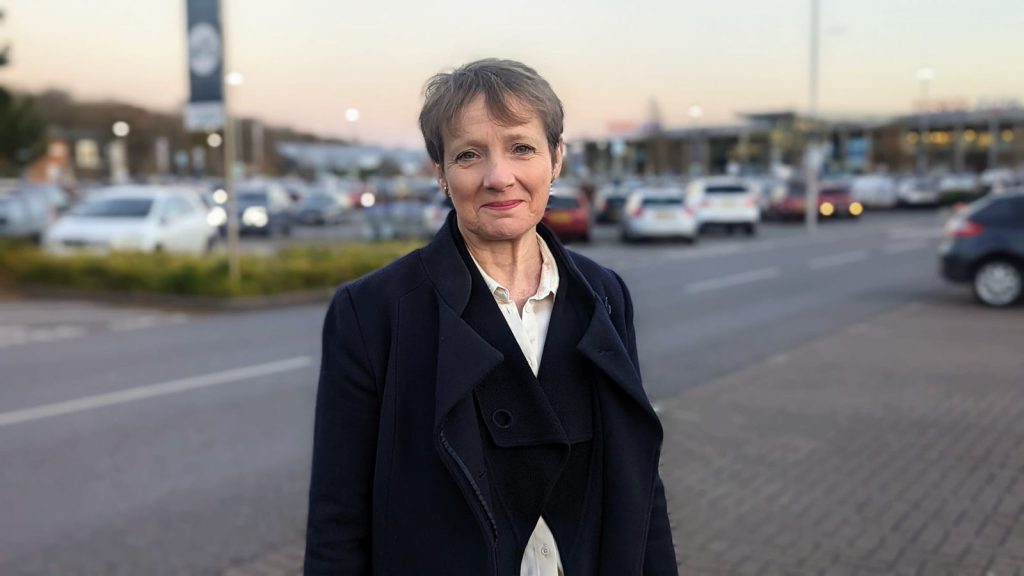
Notes: Labour’s Clare Moody is the current Avon and Somerset PCC – she won the 2024 election beating the Conservative predecessor Mark Shelford by more than 4,900 votes but with only a 23% turnout. The post of PCC will end in 2028 while their office and employees are expected to be transferred the Metro Mayor in Bath’s case – Helen Godwin.
You can find out more on PCC Clare Moody’s work at https://www.avonandsomerset-pcc.gov.uk/

Bath Voice and Local Democracy Reporters
The journalists are funded by the BBC as part of its latest Charter commitment, but are employed by regional news organisations. A total of 165 reporters are allocated to news organisations in England, Scotland, Wales and Northern Ireland including Bath Voice. These organisations range from television and radio stations to online media companies and established regional newspaper groups. Local Democracy Reporters cover top-tier local authorities, second-tier local authorities and other public service organisations.
Bath Voice Monthly Newspaper is distributed free to thousands of homes and some supermarkets – distributed from the first of the month. Harry Mottram is the News Editor
Email him at news@bathvoice.co.uk Bath website: https://bathvoice.co.uk/news/
Bath Facebook: https://tinyurl.com/bdtf2kep Also on Twitter: https://twitter.com/bath_voice And Bluesky @bathvoicenews.bsky.social And also on Instagram https://www.instagram.com/harrymottram6/
Read the newspaper online at :https://issuu.com/bathvoice
To advertise to thousands of Bathonians call Shaun on 07540 383870 or email him on sales@bathvoice.co.uk