


By John Wimperis, Local Democracy Reporter: Councillors are being asked to decide whether a housing development can be built on a site where archaeologists found Iron Age burials.
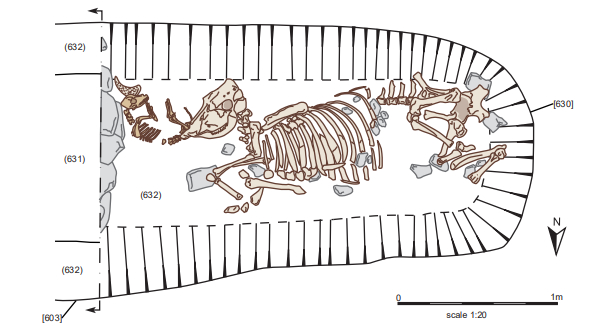
Land Promoters the Silverwood Partnership want to build 115 homes in a field on the edge of the small village of Haydon. Archaeological surveys in the field, required to secure planning permission, discovered the Iron Age grave of a man, as well as a grave where a dog and a cow were buried together.
Despite the “significant” archaeological discovery, officers at Bath and North East Somerset Council are recommending that the development go ahead. Their report stated: “The archaeology has already been excavated and is no longer present on the site.”
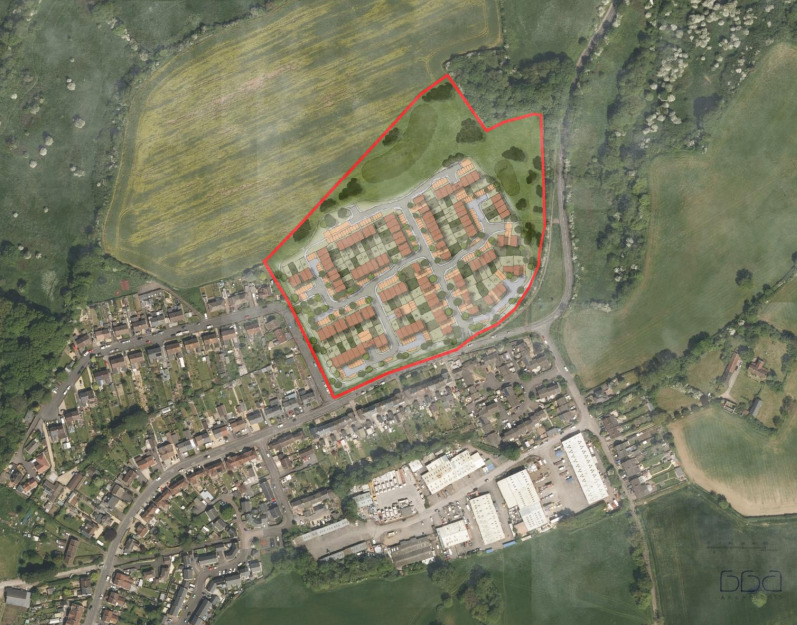
Councillors on the council’s planning committee will vote on the plan at their meeting on Wednesday July 5. Locals have raised concerns that building 115 homes would be an almost 50% increase to the size of their little village.
Local councillor Lesley Mansell (Radstock, Labour) said the homes would be a “dramatic and unprecedented change to this small, close-knit community.” She said: “The scale of the development is excessive for a hamlet of Haydon’s size.”
The site is not allocated for housing under the council’s Local Plan — the major document which sets out the council’s planning policies and where developments should go — but was one of the sites highlighted as an option to include in the next Local Plan. Developers have already begun submitted major planning applications for several of these sites, despite the new Local Plan not yet being approved.
The archaeological work discovered a number of pits on the site including sherds of what is believed to be Iron Age pottery site, along with a number of post holes. The human skeleton was discovered lying curled up in a large grain storage pit. The complete skeleton of the cow was found in a ditch, with its head lying over the skeleton of a dog, which was in turn lying on a cow horn. Burials of this kind are not unusual.
The skeletons were removed for further analysis. If planning permission for the development is granted, a condition on the development will require a full report of the archaeological findings to be analysed and published.
The Iron Age activity on the site is believed to be related to a settlement nearby. A Romano-British settlement has already been discovered in a neighbouring field, which is likely to be the continuation of an earlier settlement.
The planning committee will meet in the council chamber in Bath Guildhall at 10am on August 5.

Bath Voice and Local Democracy Reporters
The journalists are funded by the BBC as part of its latest Charter commitment, but are employed by regional news organisations. A total of 165 reporters are allocated to news organisations in England, Scotland, Wales and Northern Ireland including Bath Voice. These organisations range from television and radio stations to online media companies and established regional newspaper groups. Local Democracy Reporters cover top-tier local authorities, second-tier local authorities and other public service organisations.

Bath Voice Monthly Newspaper is distributed free to thousands of homes and some supermarkets – distributed from the first of the month. Harry Mottram is the News Editor
Email him at news@bathvoice.co.uk Bath website: https://bathvoice.co.uk/news/
Bath Facebook: https://tinyurl.com/bdtf2kep Also on Twitter: https://twitter.com/bath_voice And Bluesky @bathvoicenews.bsky.social And also on Instagram https://www.instagram.com/harrymottram6/
Harry Mottram is a freelance journalist has his own website with more stories on a variety of subjects at https://www.harrymottram.co.uk/ and has a strong social media presence – check out his work.
Read the newspaper online at :https://issuu.com/bathvoice
To advertise to thousands of Bathonians call Shaun on 07540 383870 or email him on sales@bathvoice.co.uk